

Have questions or interested in our premium window solutions? Reach out to us—we're here to help!
If you have experienced a spinal cord injury, you may find assistive technology (AT) or adaptive equipment useful as you return home and to the workplace.
The brain, the central organ of the nervous system, is responsible for regulating cognition, movement, sensation, and emotion. Beyond its fundamental functions, it possesses a unique and powerful capability—neuroplasticity—the ability to reorganize, adapt, and heal itself in response to injury, learning, or environmental changes.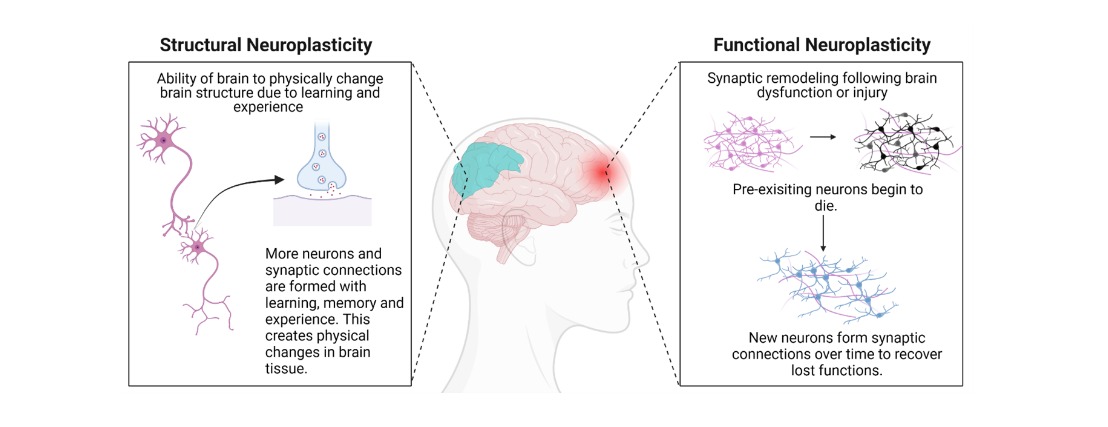
Neuroplasticity, also called brain plasticity, refers to the brain’s ability to reorganize itself by forming new neural connections throughout life. It allows neurons (nerve cells) to compensate for injury and disease and to adjust their activity in response to new situations or changes in the environment.
In clinical terms, neuroplasticity is the foundation for functional recovery after neurological injury.
Read Also: How Neurorehabilitation Helps in Stroke Recovery
The brain contains billions of neurons that communicate through synaptic connections. Repeated behaviors, thoughts, or physical activities strengthen specific neural pathways, enhancing efficiency and performance.
In cases of injury—such as ischemic stroke or traumatic brain injury—undamaged brain regions can assume functions of the impaired areas by forming alternative pathways, allowing partial or full functional recovery through compensatory mechanisms.
Read Also: Stroke Treatment and Rehabilitation: What Every Patient Should Know
This is the brain’s ability to transfer specific functions from a damaged region to undamaged areas. It's critical in post-stroke rehabilitation where speech or motor function is gradually restored.
This involves actual changes in the physical structure of the brain, such as synaptogenesis (formation of new synapses) and neurogenesis (formation of new neurons, primarily in the hippocampus).
Read Also: Effective Speech Therapy Techniques for Stroke Patients
Neuroplasticity is integral to rehabilitation medicine. With the appropriate therapy, the brain can regain lost functions after:
Yes. While neuroplastic potential is higher in early developmental stages, adults retain the capacity for neuroplastic change. Interventions in later life—such as cognitive training, aerobic exercise, and social engagement—can foster plasticity and reduce cognitive decline.
Following cerebral infarction or hemorrhage, the brain undergoes spontaneous plasticity within the first weeks, making early intervention critical.
Key Interventions:
Timeframes vary based on the severity of injury, type of intervention, and consistency. In clinical recovery, measurable changes may be observed within weeks to months, particularly with intensive and repetitive therapy.
Yes. Conditions like depression, anxiety, and PTSD are associated with maladaptive neural pathways. Treatments like CBT, EMDR, and mindfulness-based interventions promote adaptive rewiring and improve emotional regulation.
Children exhibit high levels of plasticity, enabling rapid language acquisition, motor learning, and resilience following injury. Early stimulation through play, education, and social interaction supports optimal brain development.
Yes. Despite its capabilities, neuroplasticity has constraints:
Neuroplasticity is a central principle in modern neuroscience and rehabilitation. Whether recovering from a neurological event or enhancing brain health, neuroplasticity provides a scientific foundation for hope and healing. With structured therapy and consistent mental and physical stimulation, the brain can rewire itself in profound and meaningful ways.
Assistive walking technology is no longer a vision for the future—it's a life-changing reality for thousands of people. From best mobility aids for leg injury to robotic exoskeleton for walking after injury, these technologies are restoring independence and dignity.
With the growth in technology to help paralyzed walk again, the future of paralyzed individuals is brighter, with faster recovery, improved rehabilitation, and a new hope.

Stay up to date with the latest news and promotions!